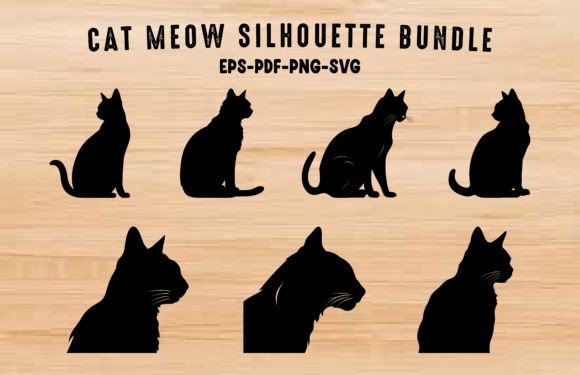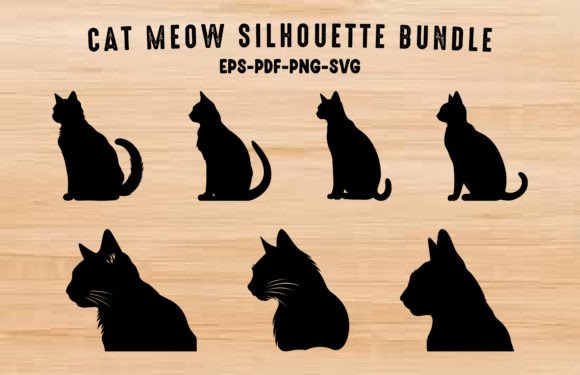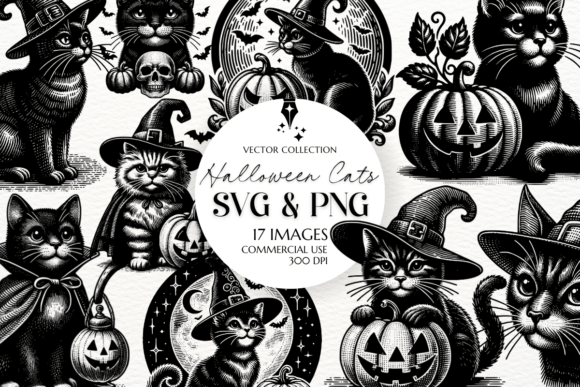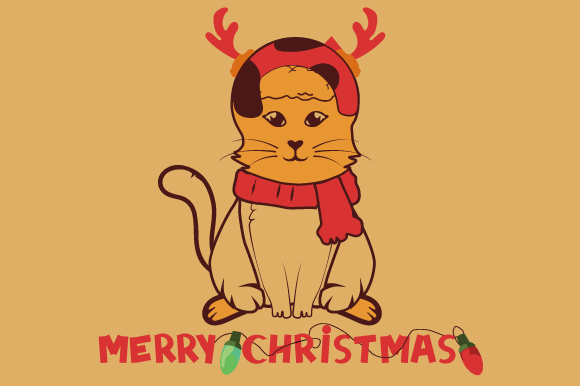
Cat ClipArt Cricut PNG DXF SVG Ai
First Impressions: That Grumpy Attitude Has Real Stitching Potential
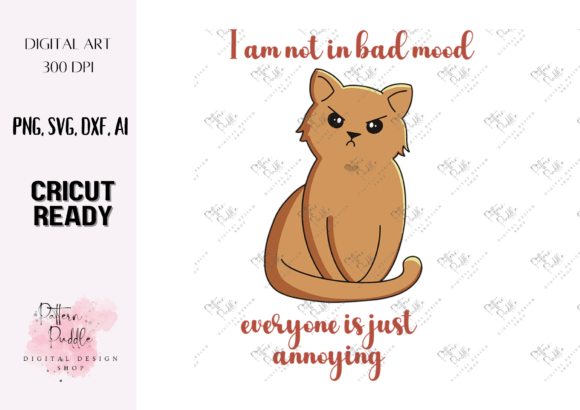
Opening Cat ClipArt Cricut PNG DXF SVG Ai feels like meeting a familiar, slightly exasperated friend — all squinted eyes, flattened ears, and a downturned mouth that says “I tolerate you, barely.” As an embroidery designer who’s stitched everything from delicate florals to bold lettering for boutique baby lines, I immediately saw its personality: compact, expressive, and built for impact. It’s not overly detailed — no whisker-by-whisker realism — but it carries strong silhouette weight and clear negative space, which is gold when translating into stitch. This isn’t a design meant for 30-stitch eyelashes; it’s made for confident, readable embroidery on real-world items.
A Real Project Test: Embroidering a Linen Tote Bag for a Local Gift Shop
Last week, I prepped a custom order for a small-town gift shop: six linen tote bags with a single front-facing motif — something playful but not cutesy, memorable but not cluttered. Cat ClipArt Cricut PNG DXF SVG Ai landed perfectly in that sweet spot. I resized it to fit a 4” hoop (a common size for totes), ran a quick test on scrap linen with medium tear-away stabilizer, and watched how the shapes held up. The brows, mouth, and ear outlines translated cleanly into satin stitch edges; the face area stayed open enough for smooth fill stitch without pilling or thread buildup. Customers responded instantly — not just because it’s a cat, but because the expression reads *before* they even get close. That kind of instant recognition matters when your finished product sits on a shelf next to ten other handmade totes.
Where It Shines (and Where It Needs Extra Care)
This design naturally excels in projects where charm meets clarity:
- Custom apparel: Works beautifully on sweatshirt cuffs, pocket corners, or chest placements — especially on mid-weight cotton or fleece where stitch definition stays sharp.
- Embroidered patches: Its clean outline and balanced proportions make it ideal for sew-on or iron-on patches used on denim jackets, backpacks, or aprons.
- Baby embroidery: Surprisingly effective on onesies or burp cloths — the grumpy vibe reads as cheeky rather than stern, and the lack of tiny details means no snagging risk for little hands.
- Holiday embroidery & personalized gifts: Think tea towels for cat-loving aunties, pillow covers for dorm rooms, or kitchen aprons for baker friends — it adds character without overwhelming.
But be thoughtful in these situations:
- Small hoop sizes under 3”: The mouth curve and inner ear detail begin to blur. Simplify or skip if stitching on keychains or tiny caps.
- Stretchy or thin fabric: Like jersey tees or lightweight rayon — use cut-away stabilizer and reduce stitch density in fill areas to avoid puckering.
- Dark fabric backgrounds: The design relies on contrast. Test thread colors thoroughly — charcoal gray or deep navy thread often reads warmer and more intentional than black on black.
- Curved surfaces (like structured caps): The flat, centered composition holds up better than asymmetrical or diagonal layouts, but always do a baste stitch first to confirm alignment.
What It Adds to Your Handmade Product — Beyond the Stitch
Using Cat ClipArt Cricut PNG DXF SVG Ai isn’t just about putting a cat on fabric — it’s about signaling tone, audience, and craft intention. For Etsy sellers, it elevates a basic tote into a curated, personality-driven item. For craft fair vendors, it sparks conversation and photo shares. For small shop owners building a cohesive brand, it fits seamlessly into a line of illustrated, slightly irreverent design assets — think matching mugs, stickers, and embroidered tea towels, all sharing that same confident, no-nonsense visual voice.
It also supports professionalism quietly: the balanced spacing, consistent line weight, and intentional simplification tell customers this wasn’t slapped together — it was chosen and executed with care. That perception directly affects perceived value, repeat purchases, and word-of-mouth trust.
Practical Designer Notes Before You Stitch
Before adding Cat ClipArt Cricut PNG DXF SVG Ai to your next embroidery project, take these steps:
- Test the design on scrap fabric that matches your final material — especially if using textured weaves or blends.
- Check thread color contrast in both natural and artificial light — what reads well on screen may disappear on dark chambray.
- Review stitch density: if the fill area looks heavy on your software preview, reduce density by 5–10% for breathable fabrics.
- Confirm hoop size compatibility — while the original file includes multiple formats (PNG, DXF, SVG, Ai), your embroidery software may require conversion; verify stitch integrity after import.
- Inspect small corners and curves at 200% zoom — look for jagged vectors or unintentional gaps that could cause skipped stitches.
- Run black-and-white mockups to assess readability on light and dark backgrounds — this saves time on re-dos.
- Use appropriate stabilizer: medium tear-away for stable wovens, cut-away for knits, and topping for napped fabrics like terrycloth.
- Verify licensing terms before selling finished products or bundling it into digital embroidery files — since this falls under Illustrations and Graphics, commercial use rights aren’t automatic unless explicitly stated.
Final Thought: Personality With Purpose
Cat ClipArt Cricut PNG DXF SVG Ai isn’t just clipart — it’s a tiny piece of attitude you can stitch, sell, and stand behind. It works because it balances simplicity with expression, scalability with charm, and digital flexibility with real-world embroidery behavior. Whether you’re making a one-off personalized gift or stocking 50 embroidered aprons for your craft business, this design earns its place in your library — not as filler, but as a reliable, recognizable, and quietly professional tool.