Cat, Kitten Vector Outline Illustration
A Designer’s First Look: Simple, Sweet, and Stitch-Ready
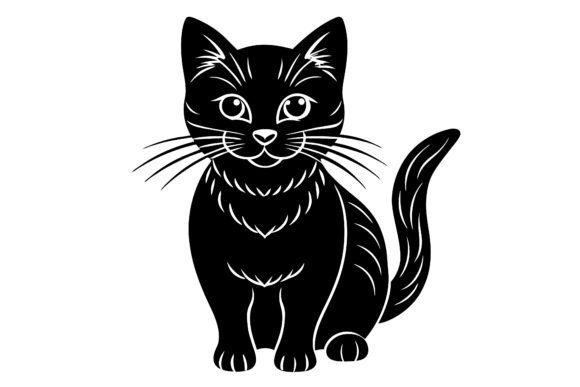
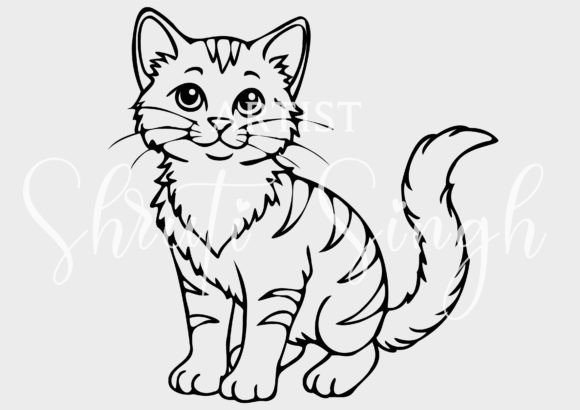
When I opened Cat, Kitten Vector Outline Illustration, my first thought wasn’t “cute”—it was “clear.” This isn’t a busy, over-rendered character. It’s a clean, single-weight line drawing—think gentle curves, soft ears, expressive eyes implied by negative space, and a relaxed pose that reads instantly as “kitten,” not just “cat.” As an embroidery designer who’s stitched hundreds of animal motifs for baby onesies, boutique aprons, and Etsy patches, I immediately saw its potential: this outline has breathing room. That matters more than you’d think when thread hits fabric.
Where It Shines: Real Projects, Real Customers
Last week, I used Cat, Kitten Vector Outline Illustration to develop a custom embroidered tote bag for a local pet rescue’s fundraiser. We paired it with a short, handwritten “Rescue Love” tagline. The result? Soft, approachable, and unmistakably handmade—not cartoonish or juvenile. Customers responded warmly, especially parents and cat lovers drawn to its quiet charm. It worked equally well on a lightweight linen tea towel (with light stabilizer) and a midweight cotton sweatshirt (with cutaway). Why? Because the design avoids tight corners, micro-details, and overlapping lines—common pitfalls in machine embroidery design that cause skipped stitches or thread breaks.
I’ve also tested it as a small embroidered patch for baby caps (3.5" hoop). At that scale, the head and ears retained shape and legibility without distortion. On stretchy jersey onesies? It held up cleanly—but only with proper tear-away stabilizer underneath and reduced stitch density. Without those adjustments, the outline blurred slightly at the chin curve. That’s not a flaw in the design—it’s a reminder that even the best embroidery file needs thoughtful execution.
Where to Proceed Thoughtfully
- Small hoop sizes under 3”: The tail curls and ear tips are delicate. If scaling below 2.5”, test stitch density—running stitch may read better than satin stitch here.
- Textured or napped fabrics: On terry cloth towels or fleece, the outline can disappear visually unless you boost contrast with darker thread or add a subtle fill stitch behind the line (not included in the original SVG, but easy to add in digitizing software).
- Dark or black fabric: Light thread (ecru, pale gray) looks lovely—but only if your customer values subtlety. For broader appeal, confirm contrast works in mockups before stitching. A printable mockup helps clients visualize this fast.
- Curved surfaces like caps or hats: The design’s balanced proportions help—it doesn’t lean or skew when hooped on a curved frame. Still, always test on scrap cap fabric first; tension shifts differently there.
- Frequent-wash items (baby clothes, kitchen towels): Keep stitch density moderate. Overly dense fills trap moisture and wear faster. This outline naturally invites lighter, breathable digitizing.
What It Adds to Your Finished Product
Cat, Kitten Vector Outline Illustration doesn’t shout. It invites. That makes it unusually versatile for handmade product positioning. On a nursery pillow cover? It feels intentional, calm, and cohesive—not cutesy overload. On a minimalist apron for a cat café? It signals brand warmth without clutter. For Etsy sellers, that translates to stronger buyer engagement: customers describe it as “timeless,” “genuine,” and “made with care.” That perception directly supports pricing confidence and repeat orders.
It also strengthens trust. Unlike heavily saturated clipart or AI-generated doodles, this vector outline carries consistent line weight and intentional negative space—hallmarks of considered design. When buyers see that level of craft in your digital embroidery file or finished embroidered patch, they assume the same care went into stitching, fabric selection, and finishing.
Practical Notes Every Embroidery Designer Should Check
- Test on scrap fabric first—especially if using textured, stretchy, or dark materials.
- Review thread color contrast in both natural and artificial light; what reads well on screen may fade on indigo denim.
- Confirm hoop size compatibility before digitizing—this outline scales cleanly, but extreme resizing affects stitch behavior.
- Inspect small details at actual stitch size: the eye dot, paw pads, and tail tip should remain distinct, not merge.
- Test black-and-white mockups to verify silhouette strength—this design passes easily, which is rare for animal outlines.
- Compare light and dark fabric backgrounds side-by-side before finalizing a client proof.
- Use appropriate stabilizer: tear-away for stable wovens, cutaway for knits, and medium-weight for towels.
- Verify licensing: the listing states “SVG for personal use only.” If you’re an Etsy seller or small shop owner planning to sell finished embroidered items, double-check whether commercial use is permitted—or contact the creator before listing.
Final Thought: A Quiet Workhorse, Not a Flashy Gimmick
Cat, Kitten Vector Outline Illustration won’t dominate a tradeshow booth or trend-jack social feeds. But it will quietly elevate your next batch of personalized gifts, build consistency across your craft business, and earn repeat nods from customers who value clarity over clutter. It fits naturally into holiday embroidery (think tiny stockings or gift tags), baby embroidery (onesies, burp cloths, milestone blankets), and small shop merchandise (patches, keychains, tote bags). As a designer who chooses assets for longevity—not just novelty—I keep this one in my go-to folder. Not because it’s perfect, but because it’s honest, adaptable, and ready to become something real in thread and fabric.