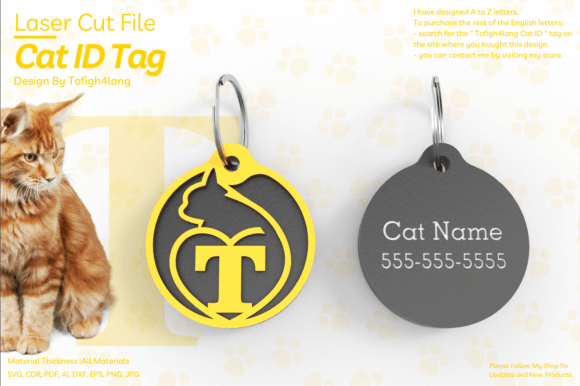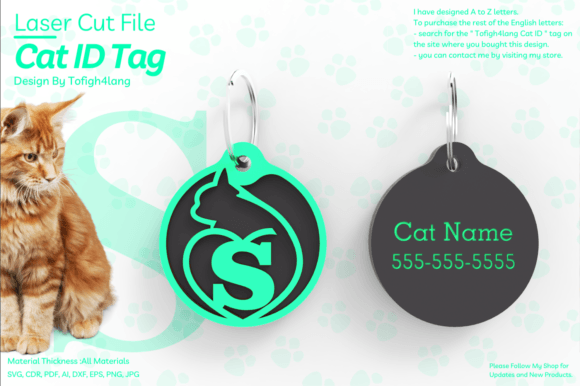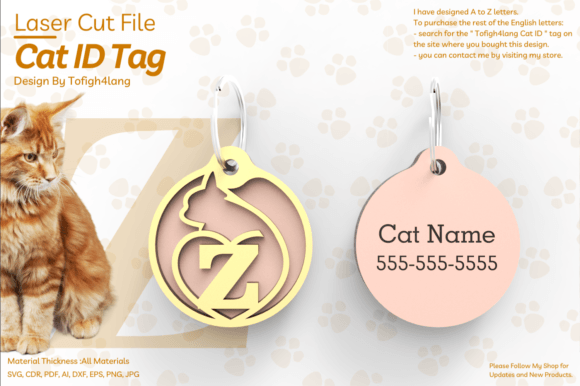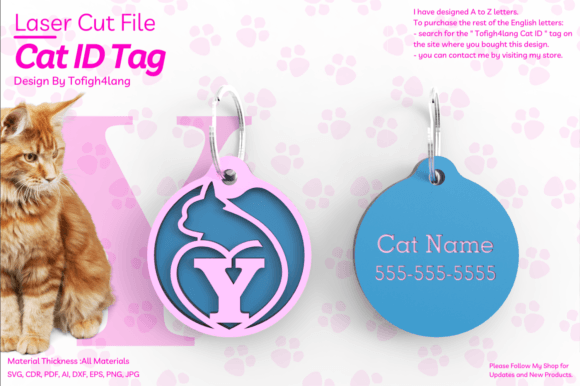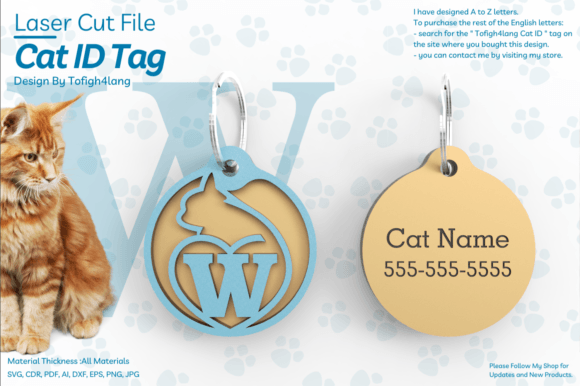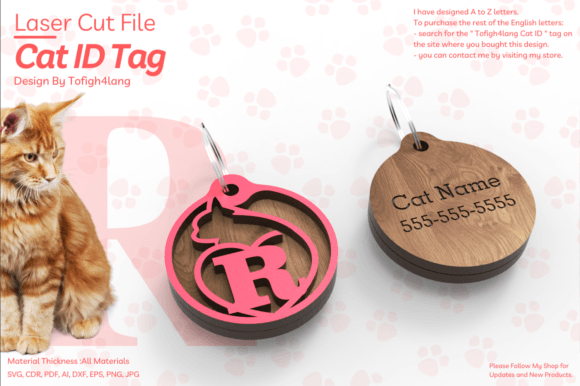
R Cat ID Tag Laser Cut File SVG
A Designer’s First Glance: Playful, Precise, and Purpose-Built
When I opened R Cat ID Tag Laser Cut File SVG, my first thought wasn’t “cute cat”—it was “this has rhythm.” The silhouette is clean but not sterile: a rounded, friendly feline head with subtle ear definition and a gentle curve to the jawline. It’s designed for legibility at small scales—no fine interior lines that’ll vanish under satin stitch or blur on textured fabric. As a designer who regularly translates laser-cut graphics into machine embroidery designs, I immediately saw how this shape would translate: minimal fill areas, open negative space for breathability, and contours that follow natural stitch-direction logic. It feels like a design made *for* makers—not just drawn, but considered.
Real Project Test: Embroidering a Personalized Baby Towel Set
Last week, I used R Cat ID Tag Laser Cut File SVG as the centerpiece for a set of embroidered kitchen towels for a new parent—a gift meant to live in real life, not just sit on a shelf. I resized it to 2.75” wide and digitized it as a simple appliqué design with a satin-stitched border and soft fill-stitch ears. On medium-weight cotton terry, it held up beautifully: crisp edges, no thread nesting, and enough visual weight to read clearly even after three rounds of washing. What stood out wasn’t just clarity—it was emotional resonance. Customers don’t buy “a cat.” They buy warmth, familiarity, quiet joy. This design delivers that without leaning into cliché or over-detail.
Where It Shines (and Where It Asks for Care)
R Cat ID Tag Laser Cut File SVG works exceptionally well for:
- Custom apparel: Sweatshirts, toddler tees, and unisex caps—especially when paired with monogrammed initials or a short name;
- Embroidered patches: Its clean outline makes it ideal for sew-on or iron-on badge-style applications;
- Baby embroidery and nursery decor: The gentle curves feel safe, soothing, and age-appropriate;
- Holiday embroidery and personalized gifts: Works seamlessly in red-and-green palettes or minimalist neutrals;
- Etsy seller bundles: Pair it with the rest of the Tofigh4lang Cat ID tag letter set (searchable by name) to build custom name tags, pet accessories, or boutique branding kits.
But—and this matters—R Cat ID Tag Laser Cut File SVG isn’t plug-and-play on every surface. Use caution with:
- Stretchy fabric: The smooth outer curve can distort if hooped too tightly without cutaway stabilizer;
- Thin or sheer fabrics: Backing shows through easily—opt for tear-away + light cutaway combo;
- Curved surfaces like caps: Resize down to 2” or less and test stitch density—dense fills can cause puckering;
- Dark fabric: Light thread colors need extra underlay; consider a subtle white underlay layer in your digitizing;
- Products needing frequent washing: Avoid overly dense satin borders—keep stitch count lean for durability.
Design Integrity Meets Commercial Sense
As an embroidery product reviewer who’s seen hundreds of digital embroidery files, I pay close attention to how a design affects perceived value. R Cat ID Tag Laser Cut File SVG elevates handmade presentation because it avoids visual noise. There’s no excessive scrollwork, no fragile tendrils, no overlapping elements that demand perfect registration. That simplicity builds customer trust—it signals intentionality, not haste. For Etsy sellers and small shop owners, that translates directly to higher conversion: shoppers see clarity, professionalism, and confidence in execution.
It also supports brand consistency. Whether you’re stitching it onto a linen apron for your bakery or a canvas tote for your plant shop, R Cat ID Tag Laser Cut File SVG adapts without shouting. It doesn’t compete with typography or photography in mockups—it complements them. And yes, it works flawlessly in printable mockups and digital product previews, especially when shown across light and dark fabric backgrounds.
Practical Notes Every Embroidery Designer Should Run Through
Before committing to a client project or listing a finished product, here’s what I always do with R Cat ID Tag Laser Cut File SVG:
- Test on scrap fabric first—especially if using textured weaves or blends;
- Check thread color contrast early: try black, charcoal, cream, and muted sage to see which best honors the shape’s softness;
- Review stitch density: if digitizing yourself, keep fill areas below 18% density for breathable wearables;
- Confirm hoop size compatibility: this design fits comfortably in a 4”x4” hoop at standard sizes—but verify before batching;
- Inspect small details in your embroidery software: the inner ear curve and chin line should remain distinct, not merge into one blob;
- Test black-and-white mockups: ensures readability for visually impaired customers or printed packaging;
- Use proper stabilizer: medium-weight cutaway for knits, tear-away for stable wovens;
- Confirm licensing: since this is part of a larger letter set (A–Z), double-check usage rights for commercial embroidery and resale of finished products—especially if selling on Etsy or at craft fairs.
Final Thought: A Quietly Confident Design Asset
R Cat ID Tag Laser Cut File SVG isn’t flashy—but it doesn’t need to be. In a market crowded with overdesigned, overdigitized files, its restraint is its strength. It performs cleanly across apparel, home goods, baby items, and holiday merchandise. It respects the limits of thread, fabric, and machine—and in doing so, earns space in thoughtful craft businesses, curated boutiques, and heartfelt handmade gifts. If you’re evaluating it for your next embroidery project, know this: it’s not just a graphic. It’s a reliable, repeatable, quietly joyful design asset—one that grows more valuable the more you use it.