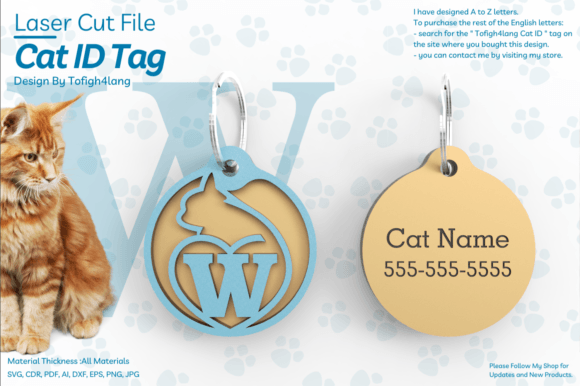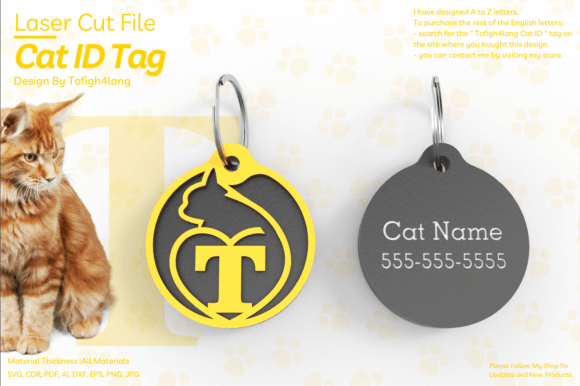
T Cat ID Tag Laser Cut File SVG
A Designer’s First Glance: Cute, Clean, and Ready for Real Life
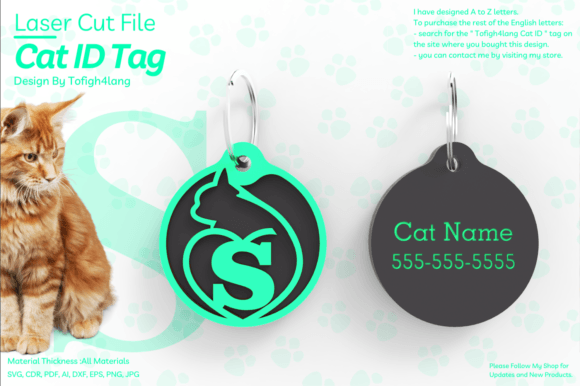
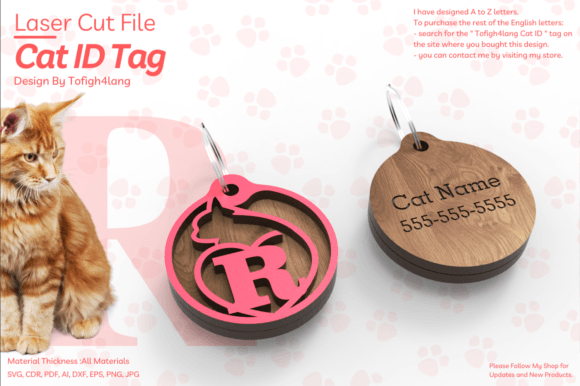
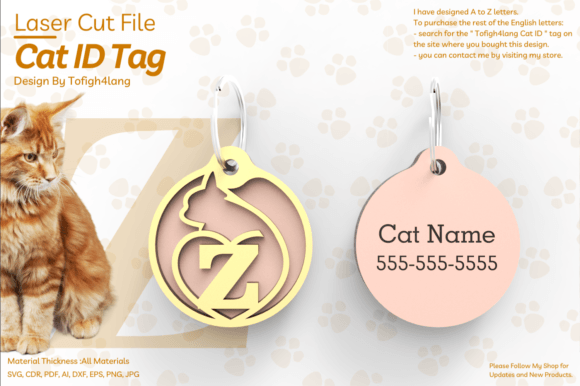
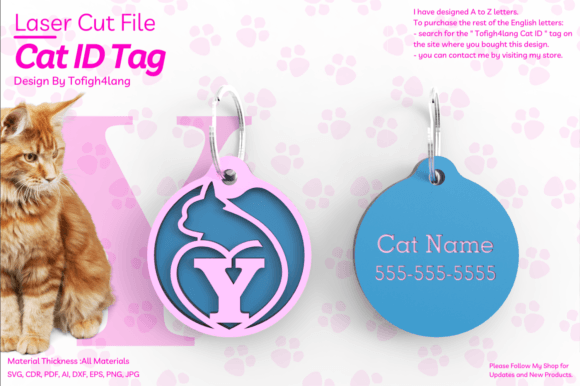
When I opened T Cat ID Tag Laser Cut File SVG, my first thought wasn’t “Oh, another cat graphic.” It was, “This could actually live on a baby onesie, a linen tea towel, or a hand-stitched patch—without looking like a stock clipart afterthought.” The silhouette is simple but expressive: a rounded feline head with subtle ear definition and clean negative space where the eyes would go. It’s not overly detailed—no whiskers, no fur texture—and that’s exactly why it works. As a designer who tests hundreds of embroidery files a year, I appreciate when a shape breathes on fabric instead of fighting it.
Where This Design Finds Its Footing (and Why It Sells)
I recently used T Cat ID Tag Laser Cut File SVG as the centerpiece for a set of embroidered kitchen towels—part of a small-batch holiday collection for my local maker shop. We paired it with minimalist monogrammed initials in a soft satin stitch below the cat. Customers responded instantly: “It’s sweet but not saccharine,” one said. “Feels handmade, not mass-printed.” That’s the quiet power of this file. It reads as both playful and polished—ideal for personalized gifts, custom apparel, and small shop merchandise where authenticity matters more than flash.
It translates beautifully to embroidered patches (especially when backed with tear-away stabilizer), holds up on sweatshirt embroidery thanks to its open structure, and scales down cleanly for baby embroidery on bibs or burp cloths. On a linen tote bag? Perfect. The shape anchors the design without overwhelming the fabric’s natural texture. And because it’s built from clean vector lines—not rasterized doodles—it adapts well to printable mockups and digital previews for Etsy listings.
Where to Pause—and Test—Before Stitching
This isn’t a “drop-in-and-embroider” file for every scenario. Its charm lies in simplicity, but that also means details vanish fast on tricky surfaces. Here’s where I recommend extra care:
- Curved surfaces like caps or baby beanies: The ears and chin curve may distort slightly if hooping tension isn’t even—always test on scrap first.
- Thin or stretchy fabric: Use cut-away + tear-away combo stabilizer. Without it, the satin-stitched outline can ripple on jersey or lightweight cotton.
- Dark fabric: The open negative space around the cat’s face means thread color contrast becomes critical. A light gray cat on navy works; off-white on black can disappear unless you add a subtle underlay.
- Small hoop sizes (under 4" x 4"): The current layout fits comfortably—but if you’re planning to add names or dates nearby, check spacing before finalizing your machine embroidery design layout.
What It Adds to Your Finished Product—Beyond Cuteness
As an embroidery file, T Cat ID Tag Laser Cut File SVG elevates perceived value without demanding complex digitizing skills. It doesn’t rely on dense fill stitches or tiny running-stitch details that snag or fray—so it’s durable across frequent washing, a real win for handmade product buyers. That durability builds customer trust, especially for boutique brands or Etsy sellers marketing heirloom-quality items.
Visually, it supports brand consistency without locking you into one style. Pair it with serif lettering for nursery decor, or bold sans-serif for modern custom apparel. It’s neutral enough to feel intentional—not generic. And because it’s part of a larger alphabet series (as noted in the description: “To purchase the rest of the English letters—Search for the Tofigh4lang Cat ID tag”), it invites repeat use. That’s gold for craft business owners building cohesive product lines—think matching pet tags, baby blankets, and sibling-themed wall art.
Practical Notes Every Embroidery Designer Should Keep Handy
Before stitching T Cat ID Tag Laser Cut File SVG into your next commercial embroidery project or client order, run through these quick checks:
- Test on scrap fabric—especially if using textured weaves like terry cloth or burlap.
- Review stitch density: If your digitizer added heavy underlay or dense satin borders, trim back where possible—this isn’t a logo that needs armor.
- Confirm licensing: The description mentions additional letters are available under “Tofigh4lang Cat ID tag”—verify whether your purchase includes commercial rights for finished goods or just personal use.
- Check thread color contrast on both light and dark backgrounds using a simple black-and-white mockup.
- Use proper stabilizer—cut-away for knits, tear-away for stable wovens, and avoid iron-on-only options unless you’re confident in your press settings.
- Inspect corners and curves at actual stitch-out size: What looks smooth on screen may feather or skip on machine without minor path adjustments.
Final Thought: A Quietly Versatile Workhorse
T Cat ID Tag Laser Cut File SVG won’t shout from a shelf—but it will hold attention long enough for someone to pick it up, turn it over, and imagine it stitched onto their favorite apron or gifted to a new pet parent. It’s the kind of digital embroidery file that earns repeat orders because it delivers clarity, charm, and craft integrity without overpromising. Whether you’re designing for holiday embroidery, launching a small shop product, or building a library of reliable design assets, this one earns its place—not as a novelty, but as a thoughtful, functional tool in your creative toolkit.