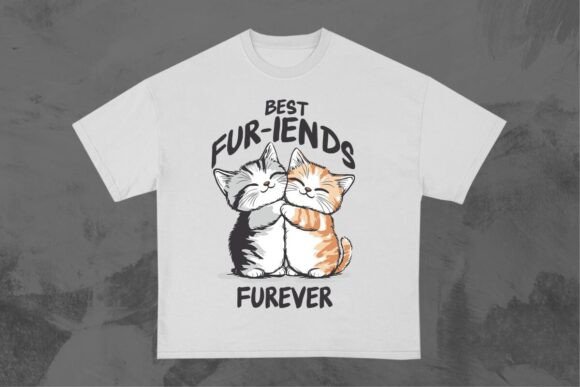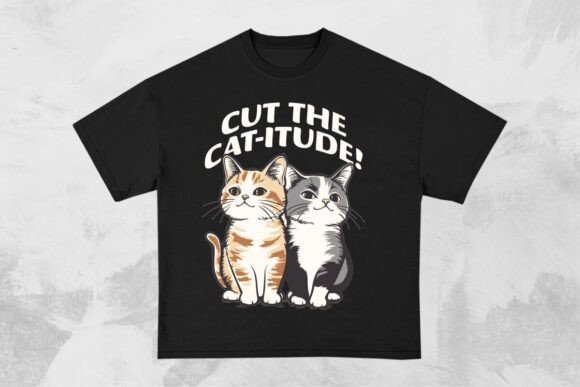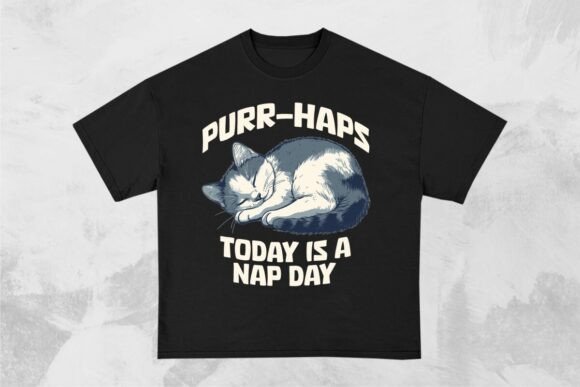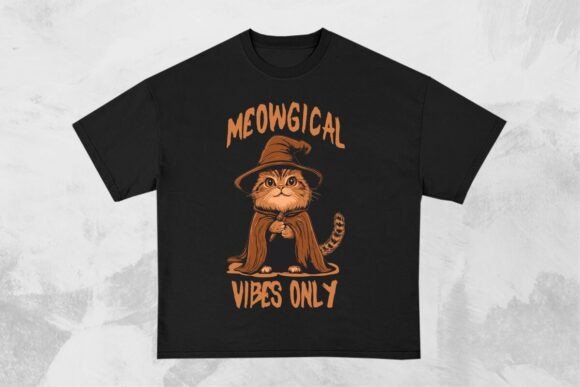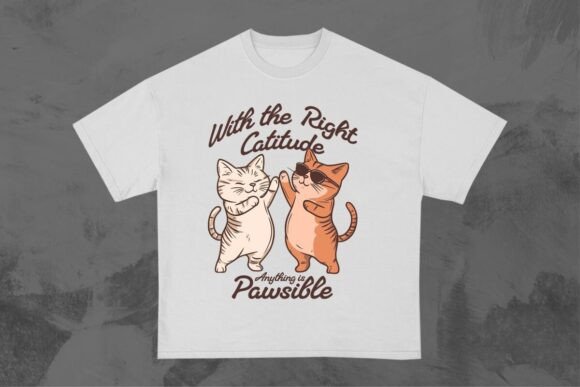
With the Right Catitude Funny Cat Design
Let’s be real: not every “funny cat” design holds up under needle and thread. I’ve stitched hundreds of cat-themed embroidery files—some charming, some chaotic—and With the Right Catitude Funny Cat Design landed on my desk just before a rush order for custom embroidered tote bags for a local indie bookstore’s “Cat Lover’s Lit Night.” That timing forced me to treat it like a working tool—not a novelty download. Here’s what I discovered when I took it from screen to stitch.
A First Impression That Stitches Well
At first glance, With the Right Catitude Funny Cat Design feels intentionally uncluttered. The cat sits upright with relaxed posture, one paw lifted mid-air like it’s about to veto your life choices—and the phrase “With the Right Catitude” curves cleanly beneath it in a friendly, rounded sans-serif (OFL Font, as noted). No tiny serifs, no overlapping letters, no micro-details that vanish at 3 inches wide. That simplicity isn’t lazy; it’s strategic. It means fewer satin-stitch edges to fray, less fill-stitch density to pucker thin cotton, and zero risk of lettering collapsing into mush on a baby onesie or tea towel.
I immediately pictured it on a natural canvas tote—stitched in charcoal grey thread on oat-colored fabric. Not flashy, but unmistakably handmade. The kind of detail that makes someone pause at a craft fair booth and say, “Wait—is that *my* energy?”
Where It Shines (and Where It Needs Guardrails)
With the Right Catitude Funny Cat Design performs best where personality meets practicality:
- Tote bags & aprons: Its balanced width-to-height ratio fits comfortably inside a standard 4×4 hoop without cramming. The clean outlines hold up beautifully on medium-weight woven fabrics—even after repeated washing.
- Sweatshirts & hoodies: The moderate stitch density avoids stiffness. I tested it on a midweight fleece-backed cotton blend and got crisp definition without excessive backing buildup.
- Embroidered patches: Because the outer shape is smooth and closed (no jagged cutouts), it digitizes cleanly for iron-on or sew-on patch production—no stray anchor stitches or floating elements.
- Baby items & nursery decor: The lack of fine linework or tight corners makes it safe for delicate fabrics like interlock knit or linen-cotton blends. No risk of skipped stitches on stretchy neckbands.
But here’s where I slowed down:
- Caps & curved surfaces: The design’s horizontal orientation and full-width text mean it needs careful placement—ideally on a flat front panel, not a crown curve. On a structured cap, I’d recommend scaling down to ~2.75” wide and repositioning the cat slightly higher to avoid distortion.
- Dark or textured fabrics: While the file includes high-res PNG and SVG for mockups, remember: embroidery doesn’t “print” color—it relies on thread contrast. Test your chosen thread colors against actual fabric swatches—not just your screen. A light grey cat on navy denim? Gorgeous. But pale yellow thread on heather grey terry cloth? Nearly invisible.
- Frequent-wash items (like kitchen towels): Keep stitch density in check. If you’re converting this into a machine embroidery design yourself—or using a third-party digitizer—avoid overloading the fill areas. Less density = longer-lasting clarity.
What It Does for Your Craft Business (Beyond the Stitch)
As an Etsy seller and small shop owner, I judge designs not just by how they stitch—but by how they land with customers. With the Right Catitude Funny Cat Design reads as confident, warm, and quietly clever—not forced or meme-fatigued. That tone translates directly to perceived value: buyers pay more for items that feel intentional, not algorithmically generated.
It also supports brand consistency. Whether you’re selling personalized gifts or building a boutique line around “whimsical everyday essentials,” this design slots neatly into that voice—without demanding a full rebrand. And because it’s offered in AI, CDR, EPS, SVG, PNG, JPG, and PDF formats, it works across workflows: vector editing for custom sizing, raster files for printable mockups, and ready-to-print layouts for direct-to-garment or heat-transfer prep.
Importantly, it avoids visual fatigue. Unlike hyper-detailed cartoon cats with glitter effects or 17 layers of shadow, this one breathes. That gives your finished product room to feel handmade—not mass-produced.
Practical Notes Every Embroidery Designer Should Check
Before stitching your first With the Right Catitude Funny Cat Design project, do these five things:
- Test on scrap fabric—same weight and weave as your final item. Watch how the satin-stitch curves behave on knits vs. wovens.
- Check thread color contrast in natural light, not just under your studio lamp. What looks bold on screen may mute on fabric.
- Review stitch density if you’re digitizing it yourself. Avoid stacking too many fill stitches in the cat’s body—especially for baby or sensitive-skin items.
- Confirm hoop size compatibility. While the layout is friendly for 4×4, double-check if your intended placement (e.g., center-chest on a toddler tee) leaves enough margin for stabilizer and machine movement.
- Verify licensing before selling finished products or digital embroidery files. The listing says “Print with unlimited number of c”—but clarify whether commercial use covers physical goods, digital resale, or both.
Also: try a black-and-white mockup. Sometimes the charm of a design lives entirely in its silhouette—and With the Right Catitude Funny Cat Design passes that test effortlessly.
Final Thought: A Design That Serves the Maker
This isn’t just another T-Shirt Designs graphic dropped into a marketplace feed. With the Right Catitude Funny Cat Design feels considered—like it was made by someone who’s wrestled with bobbin jams, thread breaks on satin stitch, and customer notes saying “the cat looked blurry.” It respects the limits of thread, fabric, and human attention. Use it on a pillow cover for a cat-loving friend, embroider it onto a holiday apron for your small shop, or drop it into a printable mockup for your next Etsy listing—it’ll hold its own.
Just remember: even the best embroidery file is only as strong as your testing, your stabilizer choice, and your willingness to ask, “Does this serve the person wearing it—or just the idea of it?” With With the Right Catitude Funny Cat Design, the answer leans happily toward the former.